
HOTLINE: 617-688-6872
Marine Animal Rescue and Response (MARR) Overview
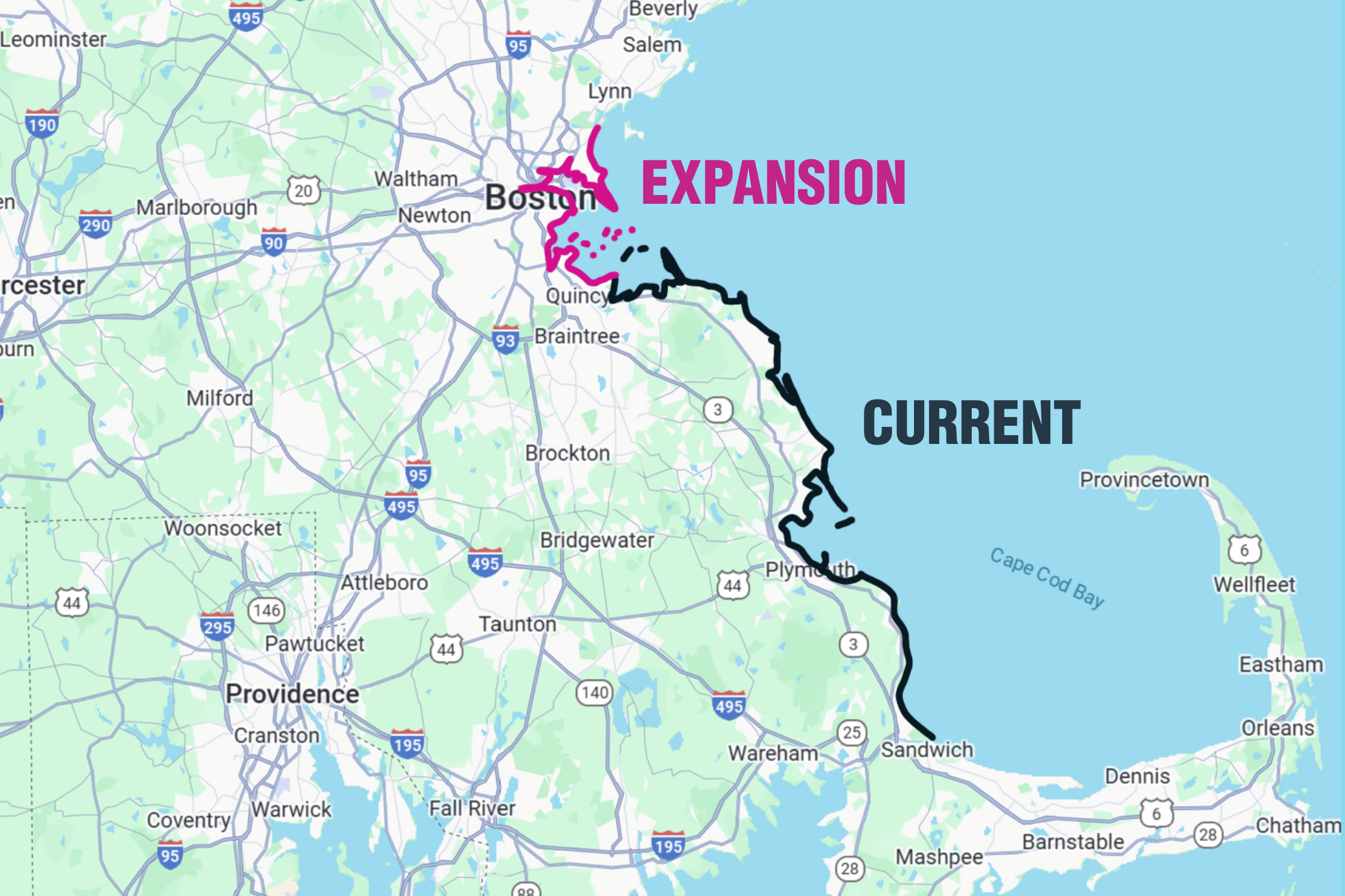
WDC’s Marine Animal Rescue and Response program covers over 300 miles of coastline and provides rapid response to animals* in distress. In addition to saving lives, our team is dedicated to increasing access to and transparency in the field of marine science through knowledge sharing.
*whales, dolphins, porpoises, and seals
Membership
Become an honorary member of this incredible team on the virtual front line. The Animal Rescue Crew membership provides vital support, grants you behind-the-scenes access, and helps us save and protect countless marine mammals.
Unusual Mortality Events
Due to the unusual increase in strandings which began prior to the construction of most of the wind areas along the east coast, NOAA declared Unusual Mortality Events for three species of large whales, humpback whales (since 2016), minke whales (since 2017), and North Atlantic right whales (since 2017).
Our team relies on reports that come in to our hotline (617-688-6872) to alert us of a stranded marine mammal.
If you come across a stranded marine mammal* from Revere to Plymouth, MA:
-
- Call our hotline at (617) 688-6872. The sooner you call, the sooner we can help the animal.
- Keep your distance. We recommend making a minimum buffer zone of 150 feet (45 meters) between you and the stranded animal to keep both humans and animals safe.
- Note your location. This will help responders know where to find the animal. Dropping a pin on your smartphone or saving the latitude and longitude is most helpful, but simple landmarks on the beach will also help our team.
- Take photos. Using the zoom feature on your phone, take pictures of the animal from a distance. We can get a lot of information from these picture
WDC's MARR team responds to marine mammals from Revere to Plymouth, Massachusetts.
HOTLINE: 617-688-6872
In our Marine Animal Rescue and Response program, WDC's team act as first responders to marine mammals who are in distress.
We call these events "strandings" and there are two different types.
LIVE STRANDINGS
“Live strandings” are when a marine mammal is alive but needs medical intervention or is unable to get back to the water on their own.
In our area, we are most likely to have strandings of whales, dolphins, porpoises, and seals. These events are often stressful for the stranded animal, especially for the whales, dolphins, and porpoises who live exclusively in water.
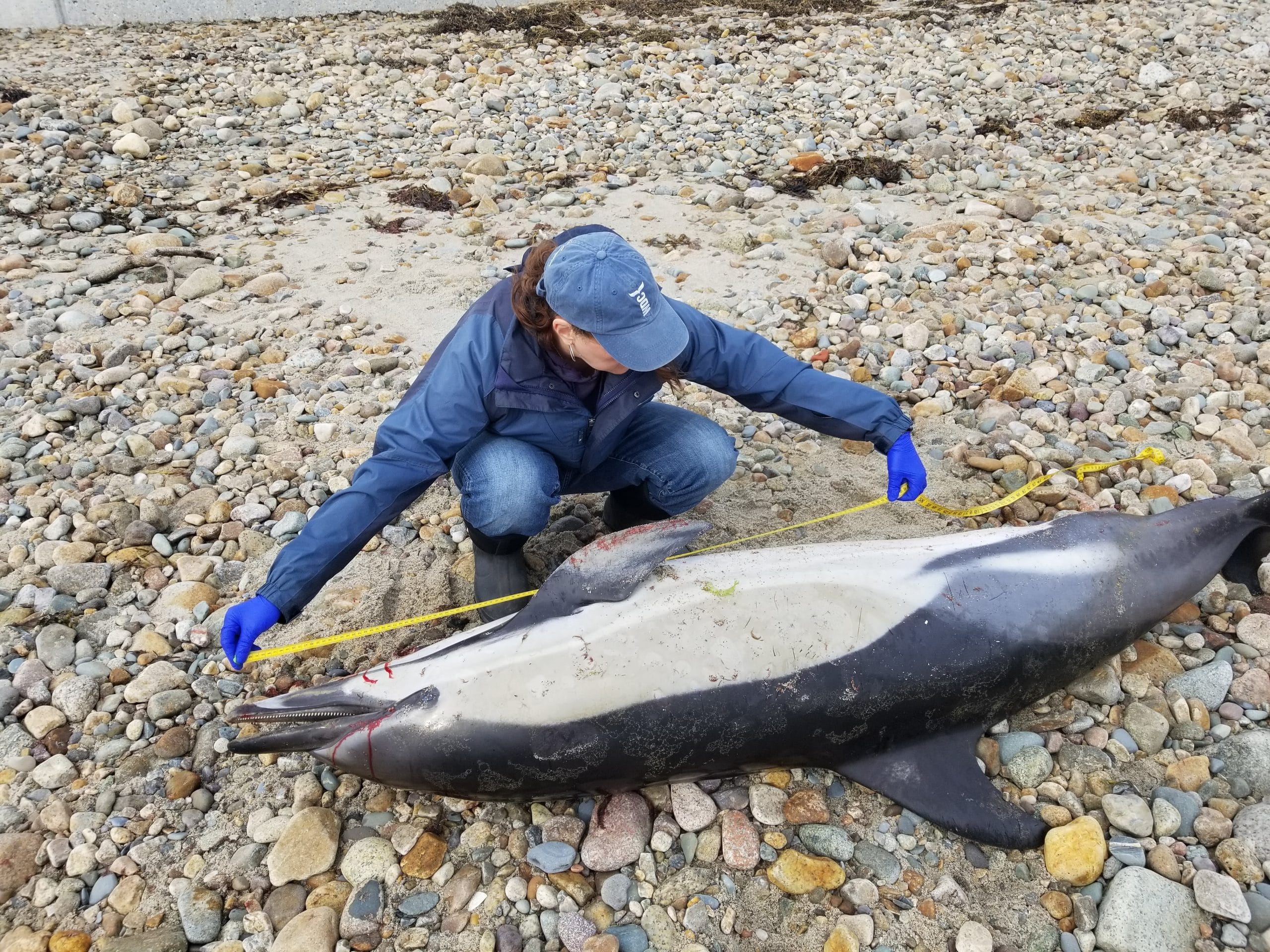
WDC’s rescue and response team will act as first responders and go to where the animals are on land and evaluate their health to determine the next steps to help them. This may include going to a rehabilitation facility, being relocated and released, or helping them get back into the water.
DECEASED STRANDINGS
The other type of stranding is for animals who have died. WDC’s rescue and response team will do examinations of the deceased animal to see if there are any signs of injury or disease and learn more about why that animal died.
By collecting important data during responses to living and dead marine mammals, we can gain a better understanding of how marine mammal populations are doing, what threats they face, and learn more about their biology, behavior, and culture.
A large percentage of the strandings in our area are seals, but our team is also equipped and prepared to respond to dolphins, porpoises, and large whales.
Our rescue and response team has a hotline (617-688-6872) where anyone can call and report a marine mammal who needs our help in our area.
WDC is authorized by NOAA to respond to marine mammals as a member of the Greater Atlantic Regional Marine Mammal Stranding Network.


RESCUING AND RESPONDING TO MARINE MAMMALS IS NO SMALL TASK. SUPPORT OUR MARINE ANIMAL RESCUE AND RESPONSE TEAM.

Our response area covers over 300 miles of Massachusetts coastline, covering the towns from Revere to Plymouth, along with 34 islands and peninsulas in Boston Harbor.
WDC's MARR team is the newest member of NOAA's Greater Atlantic Marine Mammal Stranding Network - a network of organizations extending from Maine to Virginia.
Since 1972, marine mammals have been protected by the Marine Mammal Protection Act, making it illegal to harm or harass them.
Grey seals and harbor seals can be found along the Massachusetts coast year-round, but harp seals and hooded seals only visit our area in the winter.
If you see a stranded marine mammal, stay 150 feet away, note your location (lat/long), take a photo (from afar), and call WDC’s hotline at 617-688-6872.
Make a difference
Join our team - no matter which way you choose, your commitment helps whales, dolphins, and our shared planet.
Save the whales, save the world.
Adopt
Adopt a whale and follow the lives of these amazing creatures.
Join
You can join our team and help us save whales and dolphins.

Donate
Your gifts help us take action to protect their homes.
Shop
Support WDC by shopping for yourself or a friend.