
Vessel strikes continue to be a significant threat to whales globally. In the case of critically endangered North Atlantic right whales, one of the two biggest threats to their survival as a species.
Living almost entirely in busy coastal areas, many species of whales feed, play, migrate, rest, nurse, mate, give birth, and socialize in urbanized marine highways, putting them at risk of being struck by passing vessels.
How do whales get struck by vessels?
Large passing vessels are unlikely to see a whale or may be unable to divert course if they do see one.
In addition, smaller vessels not only risk injuring whales, but the vessels and passengers themselves are at risk of damage.
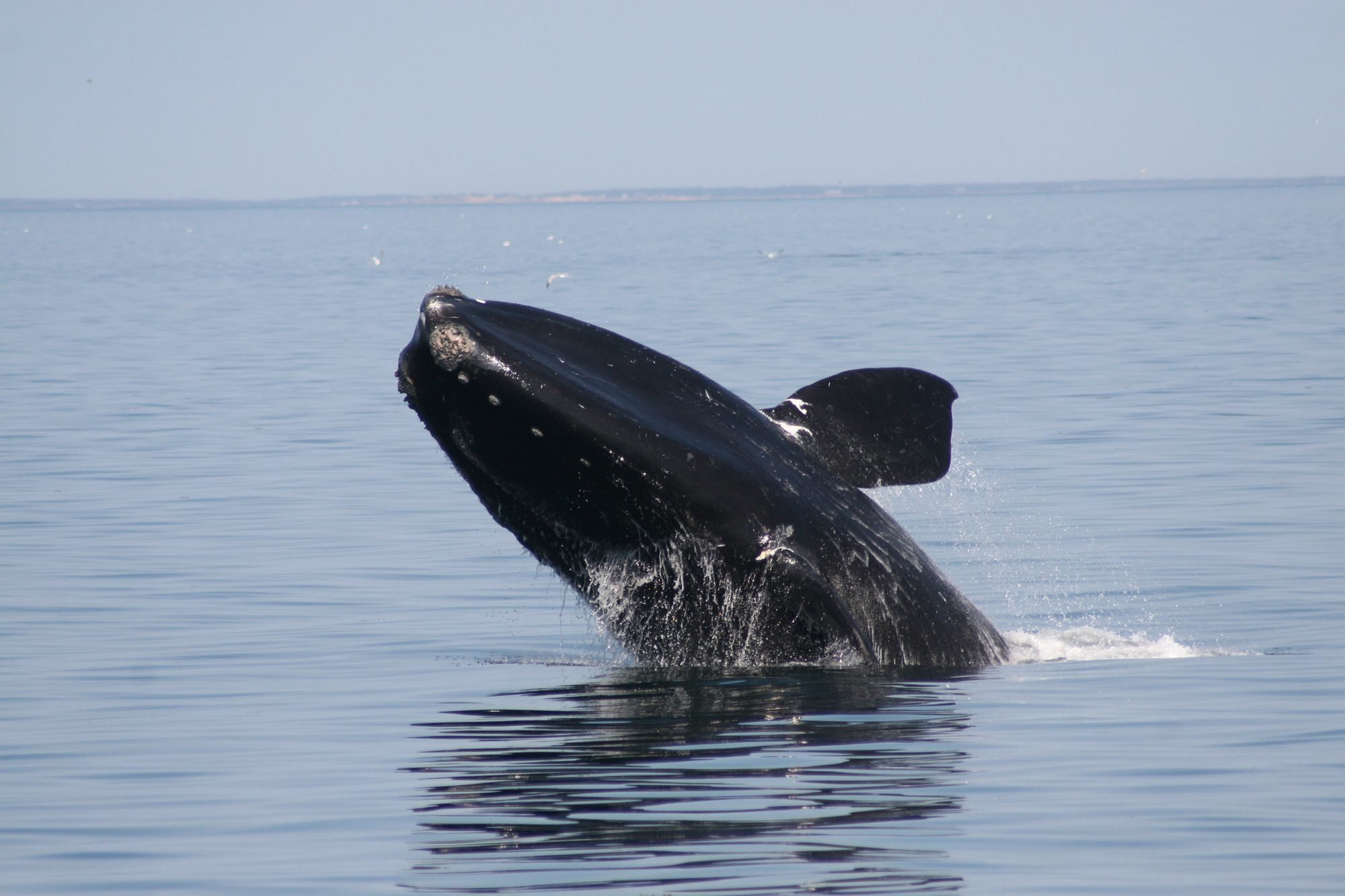
Why are they so hard to avoid?
Sometimes a whale can surface abruptly for air or swim just feet below the surface with barely a ripple visible to alert passing boaters to their presence. While a number of technological efforts have been researched to improve detecting the presence of whales, their efficacy in reducing the risk of striking one has not yet been demonstrated.
The most effective means to reduce collisions between whales and vessels is to separate them, and when that can’t be done, slow the vessel down to a speed of 10kts or less. Efforts to protect endangered North Atlantic right whales have included both of these methods initially reducing the risk of a fatal collision along the US east coast by 80-90%. However, as whales shift habitats in a changing climate, protections in emerging habitats must be implemented.
How are right whales being protected?
The governments in the USA and Canada previously introduced a number of rules in an attempt to reduce the risk of whales and boats colliding. However, as whales have shifted habitats in a changing climate, the effectiveness of some of these efforts has changed.
- Traffic separation schemes (shipping lanes) have been moved and Areas to be Avoided (ATBAs) have been established in both the U.S. and Canada to route vessels around high use North Atlantic right whale habitats.
- In the U.S. an approach regulation was implemented requiring all boaters without an approach permit, to maintain a distance of at least 500 yards from a North Atlantic right whale
- Seasonal speed restricted areas were established along the U.S. east coast and in the Gulf of St. Lawrence requiring all vessels 65 feet (20 meters) or longer to slow to 10kts during the seasons in which North Atlantic right whales were known to be in the area.
How is WDC protecting right whales from vessel strikes?
WDC and its conservation partners successfully petitioned the US government to implement and permanently extend a seasonal 10 knot vessel speed limit along the US east coast, initially reducing the risk of a fatal vessel strike of a North Atlantic right whale by 80-90%.
WDC’s research on small vessel strikes of southern Gulf of Maine humpback whales revealed that more than 1 in 10 humpbacks has been struck by a passing vessel.
With new data on emerging right whale habitats, WDC and its partners petitioned the US government in 2020, 2021, and 2022, requesting the existing speed rule be modified to cover new areas. The US government responded with a new proposed rule in 2022 but did not finalize it. Sadly, the US government withdrew its proposed rule in January 2025 citing the change in administrations.
Make a difference
Join our team - no matter which way you choose, your commitment helps whales, dolphins, and our shared planet.
Save the whales, save the world.

Adopt
Adopt a whale and follow the lives of these amazing creatures.
Join
You can join our team and help us save whales and dolphins.

Donate
Your gifts help us take action to protect their homes.
Shop
Support WDC by shopping for yourself or a friend.